Welcome to China Traffic Cone Supplier & Road Safety Products | SLOAN SAFETY
Complete Guide to Traffic Cones
Traffic Cones for Road Work, Traffic Control and Safety
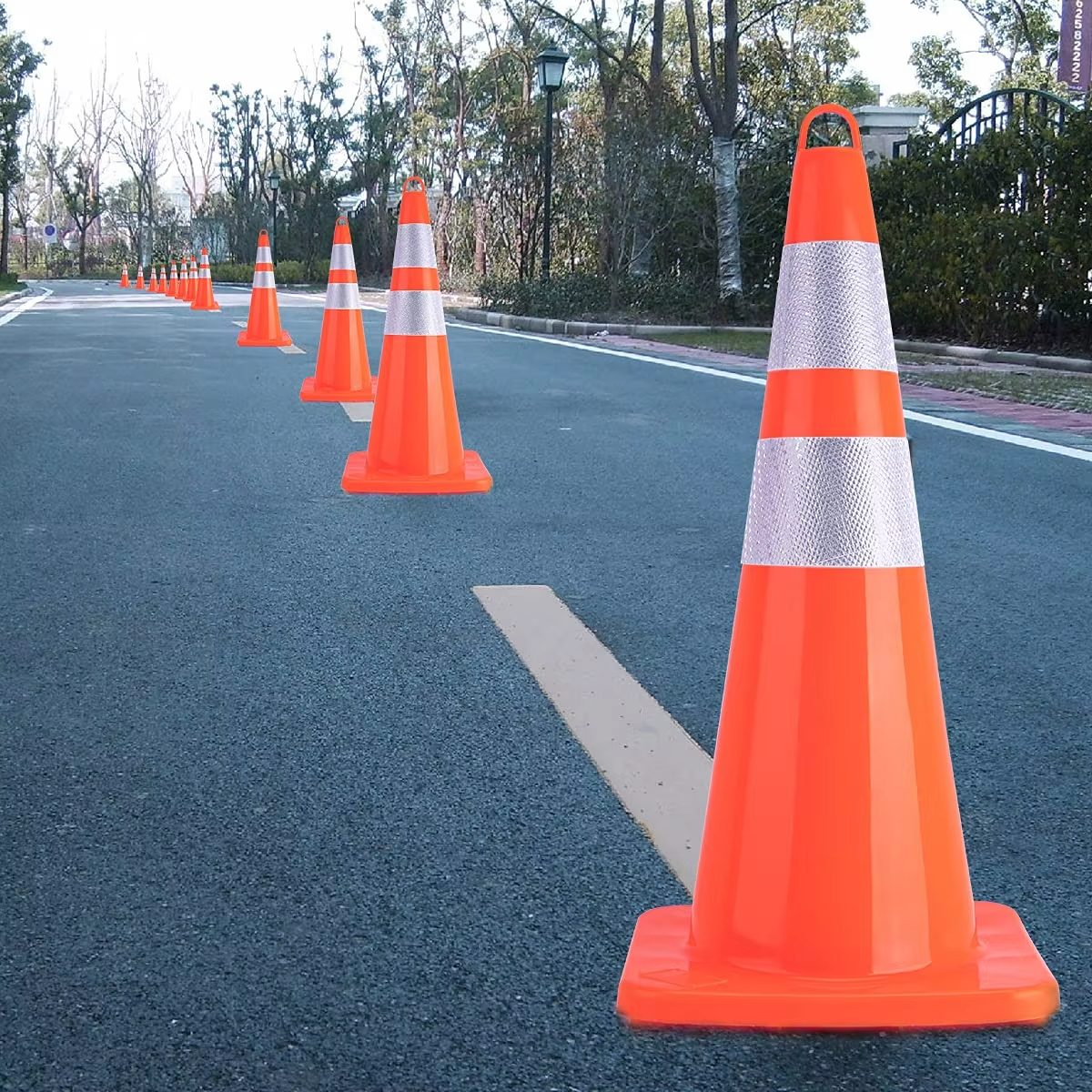
Traffic cones are used to mark hazards, guide vehicles, separate work areas and control access. They are common on construction sites, roads, parking areas, warehouses and other temporary work zones.
Choosing a traffic cone is not just about height or color. Material, weight, base design, reflective sheeting and application all affect how the cone performs.
For example, a lightweight 45cm cone may be convenient for parking, while a heavier 70cm or 90cm cone may be more suitable for road construction. A collapsible cone can make more sense when storage space is limited.
SLOAN SAFETY supplies traffic cones in different materials, sizes and designs for distributors, contractors and traffic management companies.
Browse traffic cones by material, design, size or accessories below
Traffic Cones by Material
The material affects how a traffic cone behaves when it is hit, moved, stored or exposed to outdoor conditions. It also affects the available weight and flexibility.
PVC Traffic Cones
PVC traffic cones are widely used for road construction, traffic control, parking and general work-zone applications.
One advantage of PVC is its flexibility. Depending on the formulation and construction, the cone can bend when impacted and recover its shape.
Different PVC cones can also have very different weights. The final weight depends on factors such as cone height, base size, wall thickness and material formulation.
PE Traffic Cones
PE traffic cones are often chosen when easy handling and portability are important.
They can be used for parking areas, temporary traffic control, private roads, warehouses and other lower-speed applications.
PE cones are available in different sizes and configurations, so the material alone should not be used to judge the final weight or stability of a cone.
Which Traffic Cone Material Should You Choose?
The choice between PVC and PE mainly comes down to flexibility, recovery after impact and cost.
PVC Traffic Cones
PVC is a flexible material that can bend when a vehicle or other object hits the cone and bounce back toward its original shape. This makes PVC traffic cones a practical choice for road work, traffic control and other applications where cones may be knocked over or impacted during use.
PVC cones are also commonly available in different weights and base designs, giving buyers more options when stability and durability are important.
PE Traffic Cones
PE traffic cones are generally less flexible than PVC cones. Once heavily bent or deformed, a PE cone may not return to its original shape in the same way as a flexible PVC cone.
One of the main advantages of PE is lower cost. PE traffic cones are often designed with a separate cone body and base, which can also make production and transportation more economical.
This construction is common for cones used in parking areas, temporary warning and other applications where cost and easy handling are important.
| PVC Traffic Cone | PE Traffic Cone | |
|---|---|---|
| Flexibility | High | Lower |
| Impact Recovery | Can bend and bounce back | Less likely to return after deformation |
| Construction | Often integrated cone and base | Often separate cone and base |
| Cost | Generally higher | Generally lower |
| Typical Advantage | Flexibility and recovery | Cost and easy handling |
In simple terms: choose PVC when flexibility and impact recovery are important; choose PE when a lower-cost cone with a separate base design is a priority.
Traffic Cones by Design
Traffic cone design affects how the cone is used, stored and positioned.
The main designs we supply are standard, heavy duty and collapsible traffic cones.
Standard Traffic Cones
Standard traffic cones are designed for general-purpose traffic control.
Typical applications include:
• Parking areas
• Road maintenance
• Temporary work zones
• Construction sites
• General hazard marking
They can be supplied in different heights, weights, base designs and reflective configurations.
Explore Standard Traffic Cones →
Heavy Duty Traffic Cones
Heavy duty traffic cones are intended for applications where greater stability and durability are required.
A heavy cone is not necessarily a better cone. Weight is only one part of the design. Base dimensions, material formulation, wall thickness and overall construction all affect performance.
For example, a 70cm cone with a 3.2kg base will behave differently from a 70cm cone weighing 1.75kg.
Explore Heavy Duty Traffic Cones →
Collapsible Traffic Cones
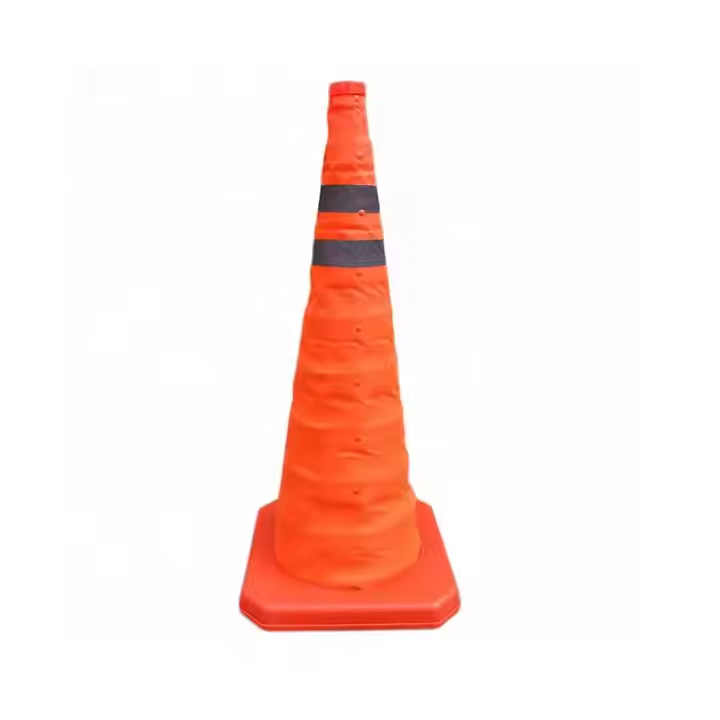
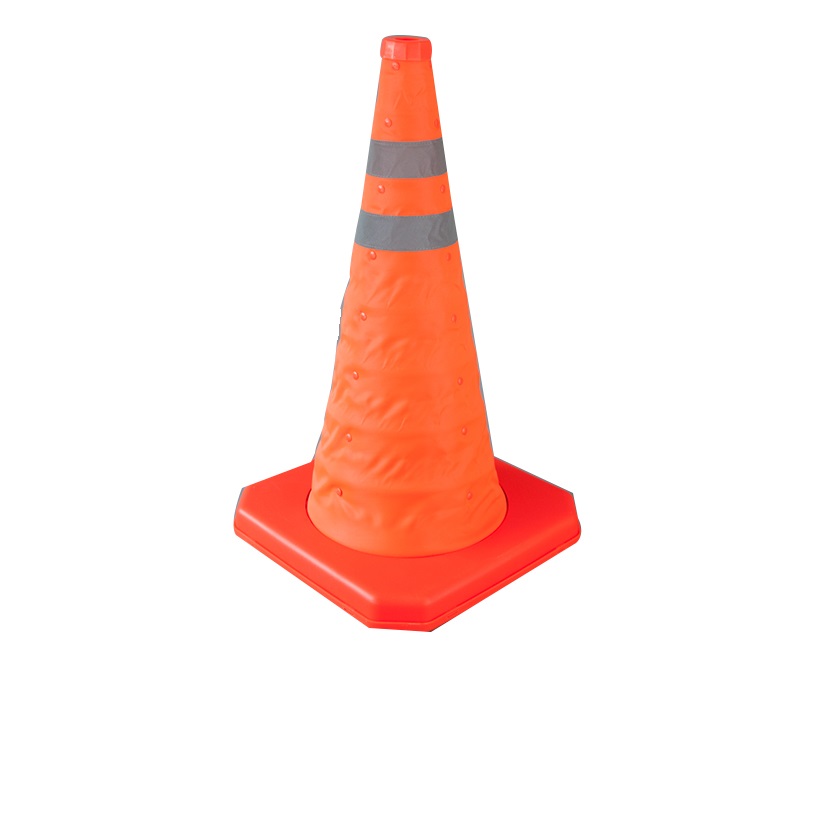
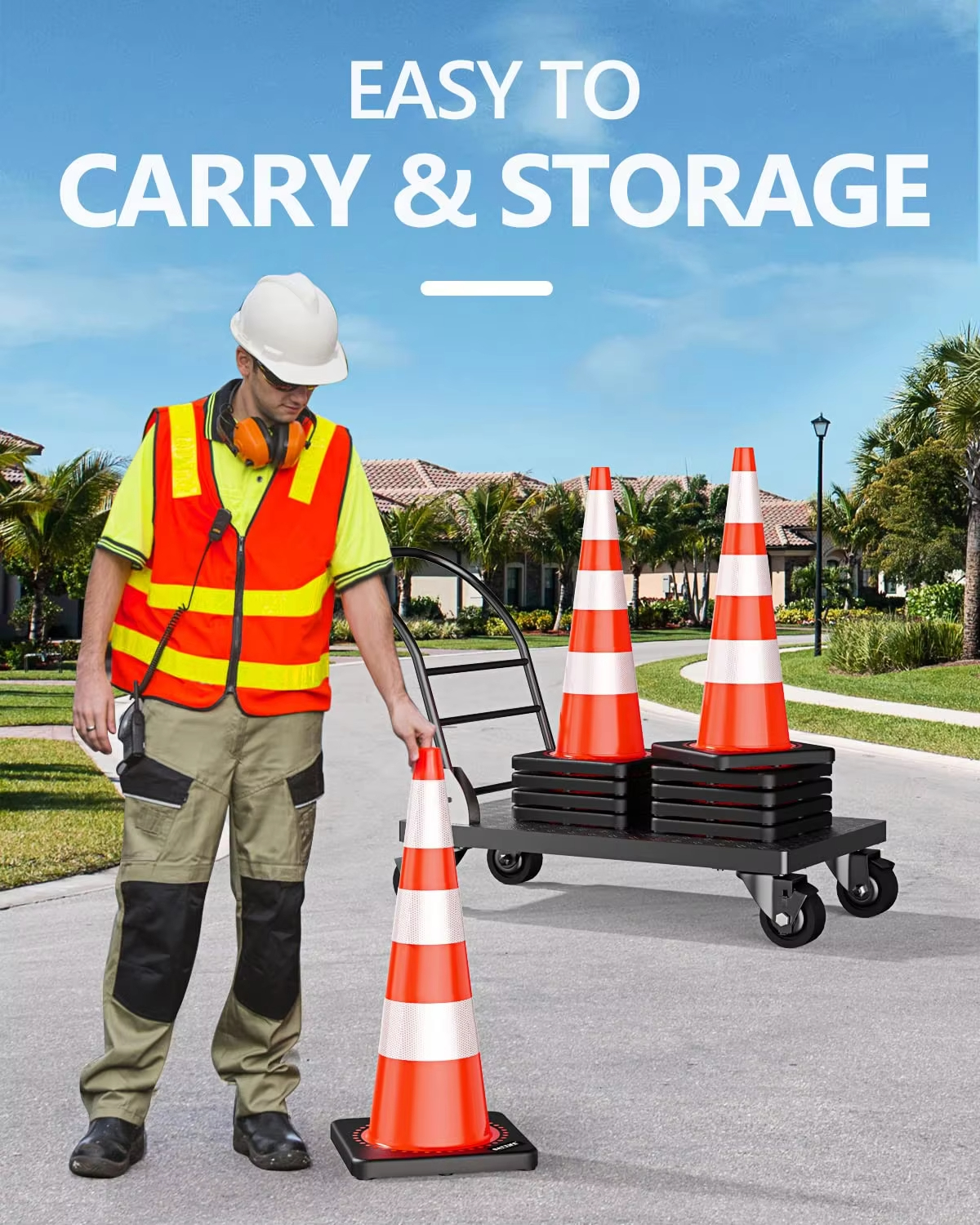
Collapsible traffic cones fold down when they are not being used, making them easier to store and transport.
They are commonly used in:
• Emergency vehicles
• Roadside breakdown kits
• Parking control
• Temporary warning
• Service vehicles
They are particularly useful when storage space is limited.
Explore Collapsible Traffic Cones →
How Should You Choose the Right Traffic Cone Design?
The right traffic cone design depends mainly on where the cones will be used, the traffic conditions and the requirements of the local market.
For general parking and low-speed applications, a standard traffic cone may be sufficient. For road construction, highways and work zones with higher traffic speeds, a heavy duty and more stable cone design is usually a better choice.
However, there is no single specification that applies to every country. Cone height, weight, reflective sheeting and other requirements can vary depending on local traffic regulations and project specifications.
Road Construction and High-Speed Applications
For road work, the cone needs to remain visible and stable in an environment where vehicles are moving at higher speeds.
A heavy duty traffic cone can provide advantages such as:
• A heavier and more stable base
• Better resistance to being displaced by wind or vehicle movement
• Greater visibility when combined with an appropriate height and reflective configuration
• Better suitability for demanding outdoor work zones
But heavier does not automatically mean better. The complete design matters, including the cone height, base dimensions, material, weight and reflective sheeting.
Check the Local Standard Before Ordering
This is particularly important when buying traffic cones for public roads or government projects.
For example, Chile's current traffic-signage manual specifies different minimum cone heights according to the maximum speed in the work zone. The minimum height is 70cm for speeds up to 60 km/h, 80cm for 70–80 km/h, and 100cm when the maximum speed is above 80 km/h. The same specification also requires orange cones with two white retroreflective bands of at least 8cm in height.
This means a cone that is suitable for a parking area may not meet the requirements for a high-speed road project.
Before placing a bulk order, always check the traffic cone requirements in the destination country and, where applicable, the specification included in the project tender.
| Design | Typical Application | Main Consideration |
|---|---|---|
| Standard Traffic Cone | Parking, low-speed areas, general warning | Lightweight and easy to handle |
| Heavy Duty Traffic Cone | Road construction, work zones, high-traffic areas | Greater stability and durability |
| Collapsible Traffic Cone | Emergency vehicles, roadside use, temporary warning | Compact storage and portability |
In simple terms: choose the design based on the application first, then check the required height, weight, reflective configuration and local standard. For highway and high-speed road work, a heavy duty design with the required height and reflective specification is generally the more appropriate starting point.
Traffic Cone Sizes
Traffic cone height affects visibility, handling and where the cone can be used.
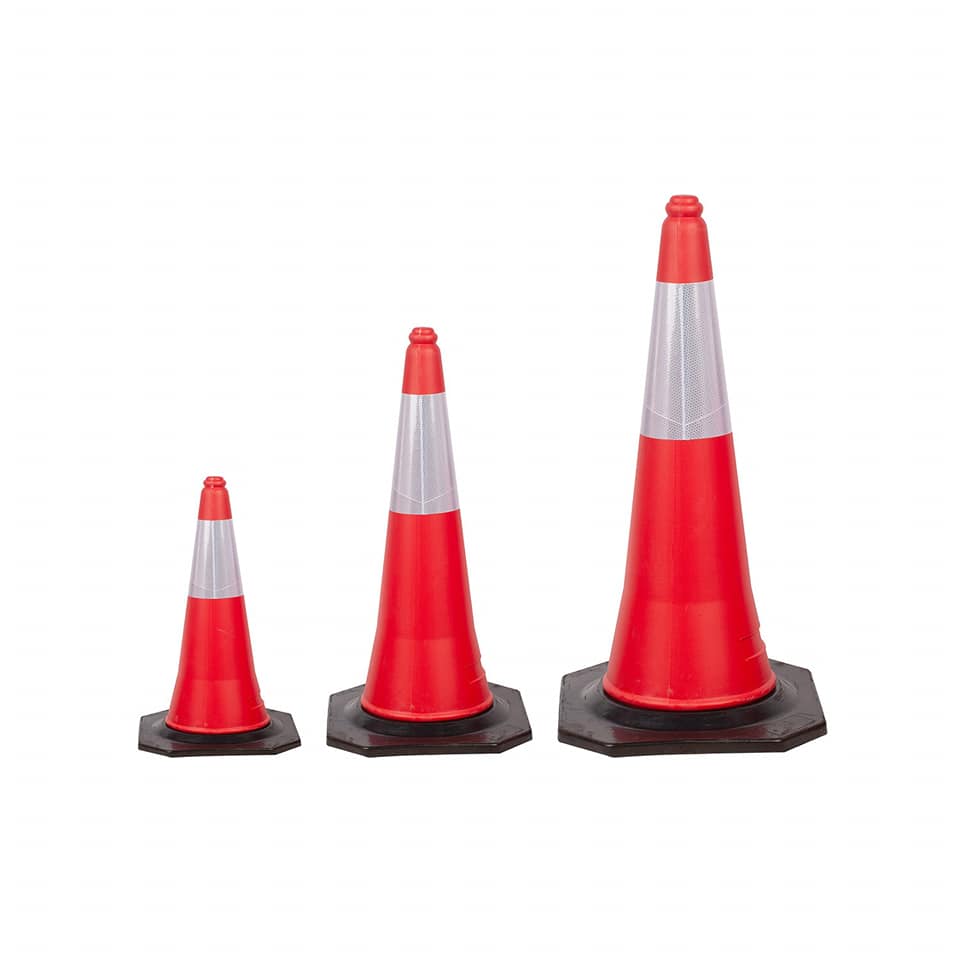
Common sizes include 30cm, 45cm, 70cm and 90cm.
| Cone Height | Common Applications | Main Advantage |
|---|---|---|
| 30cm | Warehouses, parking, private areas | Compact and easy to carry |
| 45cm | Parking, low-speed areas, temporary warning | Good balance of size and portability |
| 70cm | Road construction, work zones, traffic control | Higher visibility |
| 90cm | Highways, large work zones, road construction | Greater visibility |
These are common applications rather than universal rules. Actual requirements can vary by country, road authority and project.
Explore Traffic Cones by Size →
Does a Larger Cone Need to Be Heavier?
Not necessarily.
A cone's weight depends on more than its height. Base dimensions, wall thickness, material formulation and the amount and type of filler used can all affect the final weight.
This is why two 70cm traffic cones can have noticeably different weights while being the same height.
Read our Traffic Cone Weight Guide →
Traffic Cone Accessories
Traffic cone accessories can turn a single cone into part of a larger temporary traffic-control system.
The main accessories we supply include cone bars, cone toppers and chain connectors.
Traffic Cone Bars
Cone bars connect two traffic cones to create a temporary barrier.
They are useful for:
• Parking control
• Pedestrian areas
• Road maintenance
• Restricted areas
• Temporary access control
Traffic Cone Toppers
Cone toppers attach to the top of a traffic cone and allow compatible signs, warning devices or other attachments to be added.
The exact function depends on the topper design and the accessory being used.
Explore Traffic Cone Toppers →
Traffic Cone Chain Connectors
Chain connectors allow plastic chains to be attached to traffic cones.
A cone-and-chain setup can be used to mark pedestrian areas, restrict access or create a temporary boundary.
Cone Warning Lights
For nighttime or low-light applications, cone-mounted warning lights can improve visibility.
LED and solar-powered options are available depending on the application.
See All Traffic Cone Accessories →
How to Choose the Right Traffic Cone
There are several specifications worth checking before comparing supplier quotations.
1. Start with the Application
First decide where the cones will be used.
A warehouse, parking lot and highway work zone do not have the same requirements.
Consider:
• Traffic speed
• Indoor or outdoor use
• Visibility distance
• Wind exposure
• Required stability
• Storage and transportation
The application gives you a starting point for choosing the right size and design.
2. Choose the Cone Height
The taller the cone, the more visible it generally is from a distance.
A 30cm or 45cm cone may be practical for parking or lower-speed areas, while 70cm and 90cm cones are commonly used for road work and larger work zones.
However, always check the requirements of your local market or project.
3. Compare Weight and Base Design
Don't compare cones by weight alone.
A supplier may offer a heavier cone by using a larger base, thicker material or a different formulation. In some cases, excessive mineral filler such as calcium carbonate can also increase weight without necessarily improving the overall performance of the cone.
When comparing quotations, ask for:
• Total cone weight
• Base dimensions
• Base weight
• Cone wall thickness
• Material
• Material formulation, where relevant
This gives you a much better basis for comparison.
4. Check the Reflective Sheeting
Reflective bands help drivers see traffic cones under headlights and in low-light conditions.
When ordering cones, don't simply ask for "reflective tape."
Confirm:
• Reflective sheeting type
• Reflective grade
• Band width
• Number of bands
• Band position
• Required market specification
Different reflective materials can have significantly different performance and prices.
Traffic Cone Reflective Sheeting Guide →
5. Check Applicable Standards
Traffic cone requirements vary between markets.
Depending on the destination, specifications may cover:
• Cone height
• Color
• Weight
• Base dimensions
• Reflective material
• Reflective band configuration
• Visibility
For this reason, the specification used for one market should not automatically be assumed to meet another market's requirements.
Traffic Cone Standards Guide →
Traffic Cone Specifications to Compare
When comparing traffic cone suppliers, request the same information from each supplier.
| Specification | What to Check |
|---|---|
| Height | 30cm, 45cm, 70cm, 90cm or other |
| Material | PVC, PE or rubber-based |
| Weight | Total cone and base weight |
| Base | Length, width, thickness and design |
| Reflective Sheeting | Type, grade and dimensions |
| Color | Orange or market-specific color |
| Design | Standard, heavy duty or collapsible |
| Packaging | Woven bag, carton or pallet |
| Loading | Pieces per carton and container |
This makes supplier quotations much easier to compare.
Traffic Cone Packaging and Container Loading
For importers, packaging is not a minor detail. It affects product protection, handling and the number of cones that can fit into a container.
Common packaging methods include:
• Woven bags
• Pallets
The most suitable option depends on cone size, quantity, nesting method and how the goods will be handled during transportation.
For a full-container order, we recommend calculating the actual loading quantity based on the cone dimensions and packing method rather than relying on a standard "pieces per 40HQ" number.
Traffic Cone Packaging Guide →
40HQ Traffic Cone Loading Guide →
Traffic Cone Buying Guides
Buying traffic cones usually involves more questions than simply choosing a product from a catalog.
These guides cover the specifications that matter most when comparing products and suppliers.
How to Choose Traffic Cones
A practical overview of size, material, weight, design, reflective sheeting and application.
Traffic Cone Weight Guide
Learn why cones with the same height can have different weights and what that means when comparing suppliers.
PVC vs PE Traffic Cones
Compare the two materials based on flexibility, weight, handling, durability and typical applications.
Traffic Cone Size Guide
Compare 30cm, 45cm, 70cm and 90cm traffic cones and understand where each size is commonly used.
Traffic Cone Reflective Sheeting Guide
Understand the differences between reflective materials and what to confirm before ordering.
Traffic Cone Standards
A guide to the specifications buyers should check when sourcing cones for different markets.
Traffic Cone Packaging Guide
Compare packaging options and understand how they affect handling and transportation.
How Many Traffic Cones Fit in a 40HQ?
Learn how cone size, nesting, packaging and palletization affect container loading.
How to Import Traffic Cones from China
A practical guide covering supplier selection, specifications, samples, quality control, packaging, container loading and shipping.
Why SLOAN SAFETY
We focus on traffic safety products for B2B buyers, with traffic cones being one of our main product categories.
Our role is not simply to quote a cone by size.
We help buyers compare the details that affect the final product:
Material → Size → Weight → Base → Reflective Sheeting → Packaging → Loading
For repeat orders, keeping these specifications consistent is equally important.
If you already have a specification, drawing or sample, we can work from it. If you are still comparing options, send us your application and target quantity and we can help you work out a suitable configuration.
Need a Traffic Cone Quote?
Send us the following information if available:
• Cone height
• Material
• Required weight
• Base size
• Reflective sheeting
• Quantity
• Packaging preference
• Destination country
If you don't have a complete specification yet, simply tell us where the cones will be used and how many you need.
We can help you work out the specification before preparing the quotation.
Request a Traffic Cone Quote →
FAQ
1. Q:What are the most common traffic cone sizes?
A:Common sizes include 30cm, 45cm, 70cm and 90cm. The right size depends on the application, visibility requirements and local specifications.
2.Q:What material are traffic cones made from?
A:Traffic cones are commonly made from PVC or PE, while some designs use rubber or heavy rubber-based bases. Material selection affects flexibility, weight and durability.
3.Q:Does a heavier traffic cone mean better quality?
A: No. Weight alone does not determine quality. Base design, material formulation, wall thickness, reflective sheeting and overall construction also affect performance.
4.Q:What size traffic cone is best for road construction?
70cm and 90cm traffic cones are commonly used for road construction and larger work zones because of their greater visibility. The exact requirement depends on the market and project.
5. Q:What is the difference between standard and heavy duty traffic cones?
A: Heavy duty cones are designed for applications requiring greater stability or durability. They may use a heavier or larger base, but weight alone should not be used to define a heavy duty cone.
6. Q:What reflective sheeting should I choose?
A:The right reflective sheeting depends on the application and destination market. Buyers should confirm the required reflective grade, band width and configuration before ordering.
7. Q:Can traffic cones be customized?
A: Depending on the product and order quantity, customization may include size, weight, base design, color, reflective configuration and packaging.