Welcome to China Traffic Cone Supplier & Road Safety Products | SLOAN SAFETY
Traffic Cone Reflective Sheeting: What Should You Use on PVC Cones?
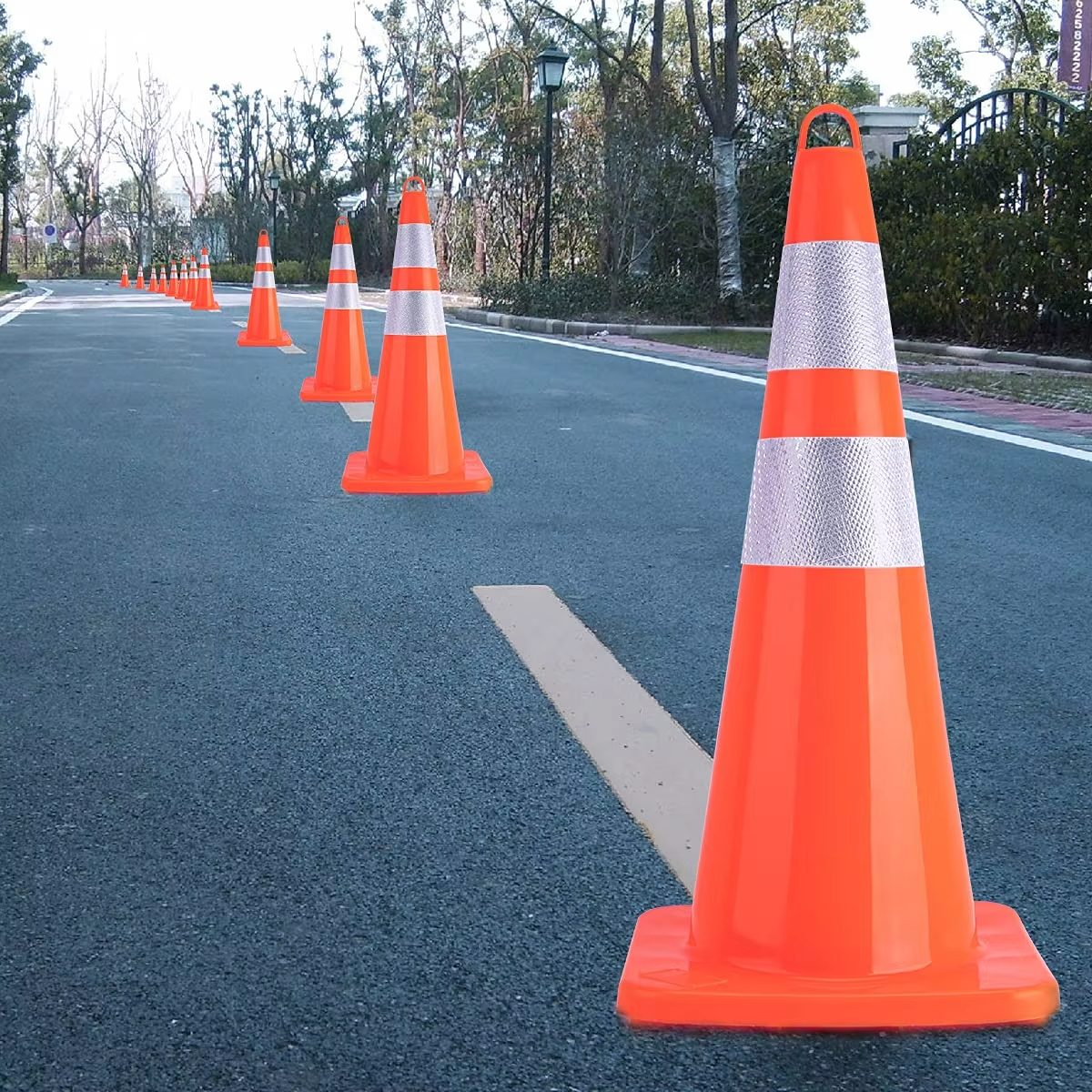
Reflective Sheeting for PVC Traffic Cones: 5 Common Options from China
When buying PVC traffic cones from China, the reflective band is one of the specifications that can have a noticeable impact on the final price.
Two cones may have the same height, weight and base size, but the reflective material can be completely different.
In the Chinese market, we commonly see five types of reflective solutions for PVC traffic cones, ranging from basic low-cost options to customized 3M sheeting:
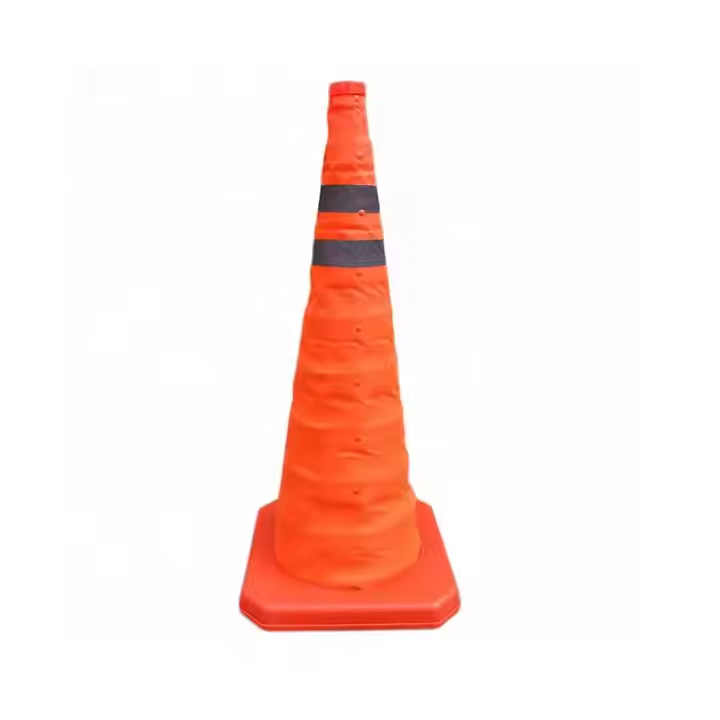
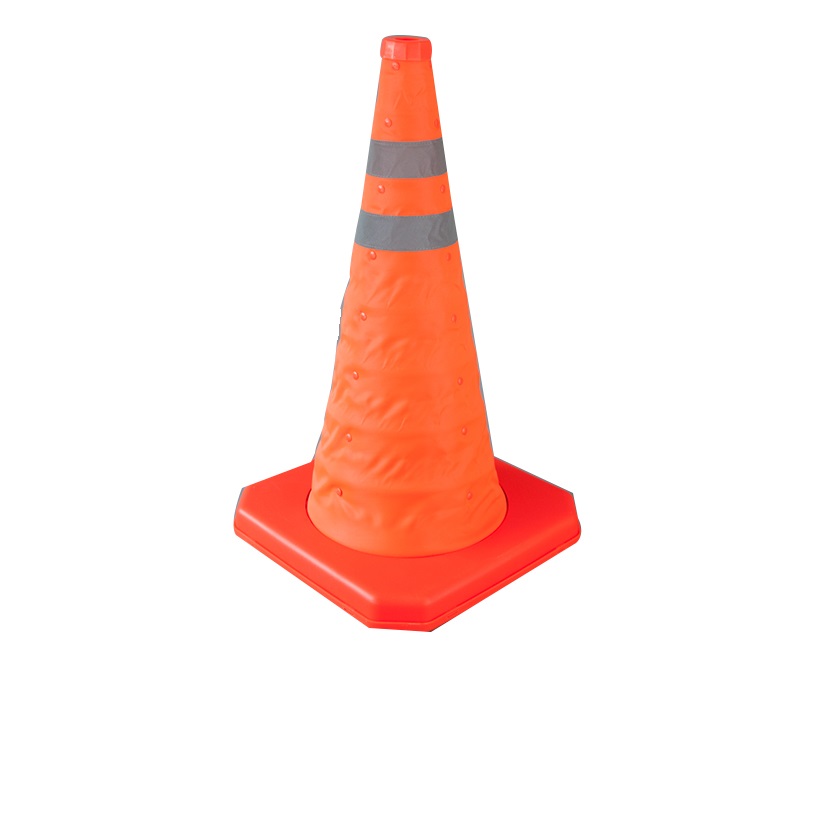
1. Reflective cone sleeve fixed with adhesive tape
2. Engineer Grade reflective sheeting
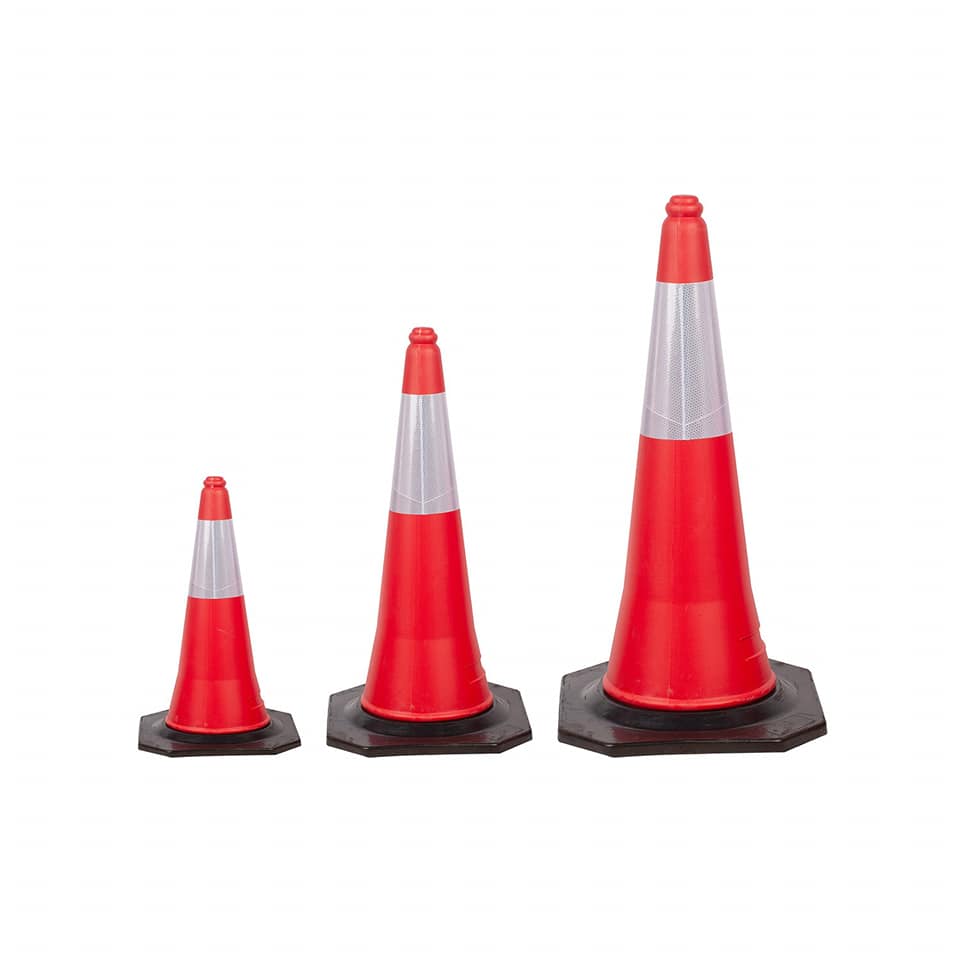
3. Self-adhesive high-intensity / bright reflective sheeting
4. High-intensity grade reflective sheeting
5. Customized 3M reflective sheeting
They are not simply five different names for the same product.
The construction, application method, appearance, reflective performance and cost can be quite different.
For buyers comparing traffic cone quotations, understanding these differences is often more useful than simply asking which cone is "better."
1. Reflective Cone Sleeve Fixed with Adhesive Tape
This is usually the lowest-cost option.
Instead of applying a high-performance self-adhesive reflective film directly to the PVC cone, the supplier prepares a reflective sleeve or collar and fixes it to the cone with adhesive tape or another simple fastening method.
You may see this type of construction on price-sensitive traffic cones.
The main advantage is simple:
It keeps the production cost low.
It can work for applications where the customer mainly needs a basic reflective appearance and does not have demanding requirements for long-term nighttime performance.
However, it is important to understand that a reflective sleeve attached with adhesive tape is not necessarily comparable to a properly bonded self-adhesive reflective sheeting.
The main points to check are:
• How the sleeve is fixed
• Type of reflective material
• Width of the reflective band
• Adhesive quality
• How well it stays in position when the cone bends
• Outdoor durability
This option makes sense when price is the main consideration, but it should not be specified for demanding applications simply because it looks similar in a product photo.
2. Engineer Grade Reflective Sheeting
The next option is Engineer Grade reflective sheeting.
This is a more conventional reflective-film solution and is generally more consistent than a simple low-cost sleeve construction.
The film is applied directly to the cone surface and is available in different constructions depending on the manufacturer.
For general traffic-control products, engineer-grade materials can provide a reasonable balance between:
• Cost
• Appearance
• Reflectivity
• Durability
This can be suitable for applications such as:
• Parking areas
• Private roads
• Warehouses
• General warning
• Lower-speed traffic control
However, "Engineer Grade" is still a broad description.
When buying from China, I would not recommend specifying only:
Engineer Grade reflective film
Ask the supplier for the manufacturer, product series and technical data.
That gives you a much more reliable comparison between suppliers.
3. Self-Adhesive Bright Reflective Sheeting (Most popular)
A higher-level option commonly offered by Chinese suppliers is self-adhesive reflective sheeting.
Unlike the basic sleeve construction, the reflective material itself has an adhesive backing and is applied directly to the PVC cone.
This gives the reflective band a cleaner appearance and allows it to follow the surface of the cone more closely.
The advantages include:
• Cleaner appearance
• Direct adhesion to the cone
• Better conformity to the curved surface
• More consistent production
• No separate fixing tape around the sleeve
For many standard PVC traffic cones, this is a practical middle-ground solution.
It provides a better product presentation than the lowest-cost sleeve while keeping the cost below specialized high-performance materials.
However, the term "bright reflective film" is not a technical grade by itself.
Different Chinese suppliers may use this term for different materials.
So if a customer specifies a particular reflective performance, the supplier should provide the actual film specification rather than relying on the commercial description.
4. High-Intensity Reflective Sheeting
The next step is high-intensity reflective sheeting, normally using a higher-performance prismatic construction.
This is where the difference becomes more relevant for road-work applications.
Compared with basic reflective materials, high-intensity prismatic sheeting can provide significantly higher retroreflective performance.
It is more suitable when nighttime visibility is an important part of the traffic-control requirement.
Typical applications may include:
• Road construction
• Outdoor work zones
• Temporary traffic control
• Areas with limited lighting
• Higher-speed traffic environments
The actual performance still depends on the specific manufacturer and product.
Therefore, when a Chinese supplier says:
High Intensity Reflective
I would ask for the technical data sheet and exact product series.
The words "high intensity" alone do not tell you enough to make a technical comparison.
5. Customized 3M Reflective Sheeting
Some customers specifically require 3M reflective sheeting for their PVC traffic cones.
For PVC reboundable cones, 3M offers flexible products such as 3M 3340i, which is designed for this type of application.
However, 3M film is very expensive. Depending on the product and quantity, the reflective film itself can sometimes cost more than the PVC cone.
For this reason, it is not a common choice for standard traffic cones. Most customers prefer a more cost-effective reflective film that meets their visibility requirements.
3M is usually selected when:
• The project specifically requires 3M
• A customer or road authority names a particular 3M product
• The project has a strict material specification
If 3M is not required, a suitable alternative can often provide a better balance between reflective performance and cost.
Comparing the Five Options
For buyers, the five options can be summarized like this:
| Reflective Solution | Cost | Reflective Performance | Appearance | Typical Position |
|---|---|---|---|---|
| Adhesive-tape cone sleeve | $ | Basic | Basic | Price-sensitive products |
| Engineer Grade | $$ | Basic–Medium | Good | General applications |
| Self-adhesive bright film | $$–$$$ | Medium | Cleaner | General outdoor use |
| High-Intensity Grade | $$$ | High | Very good | Road work / work zones |
| Customized 3M film | $$$$ | Project dependent | Premium | Specified projects |
The exact performance and price depend on the actual film manufacturer and product series.
This table is intended to explain the typical market positioning rather than establish a universal grading system.
Why Can Two PVC Traffic Cones Have Very Different Prices?
This is one of the reasons traffic cone quotations can be difficult to compare.
Imagine two suppliers both quote:
70cm PVC Traffic Cone
2.25kg
Two Reflective Bands
The specifications may look almost identical.
But Supplier A may be using a low-cost reflective sleeve.
Supplier B may be using a self-adhesive prismatic film.
The difference in reflective material alone can create a noticeable difference in the final price.
So when comparing quotations, don't ask only:
"Why is your traffic cone more expensive?"
Ask:
"What reflective material are you using?"
That usually leads to a much more useful discussion.
Why PVC Cone Flexibility Matters
There is another reason the reflective material needs to be considered carefully on PVC cones.
PVC traffic cones are designed to be flexible.
When the cone is hit, it bends and then returns toward its original shape.
The reflective band is attached directly to that moving surface.
A suitable film therefore needs to tolerate:
• Bending
• Repeated deformation
• Impact
• Curved surfaces
• Outdoor exposure
3M's cone-specific 3340i is a good example of this design approach. It is specifically developed for PVC traffic cones and described as impact-resistant and reboundable.
3M
Older 3M documentation for Series 3340 also specifically describes the material as plasticizer-resistant and designed for PVC cones.
3M Multimedia
This is why a reflective film designed for a rigid traffic sign should not automatically be assumed to be the right film for a flexible PVC cone.
What About the Reflective Sleeve?
The sleeve deserves a separate mention because it is common in the Chinese supply market.
A sleeve can be produced as a separate reflective collar and then installed on the cone.
This method can be attractive for manufacturers because:
• Production is relatively simple
• The reflective component can be prepared separately
• It can help reduce material cost
• Different cone sizes can use different sleeve sizes
• It is easy to replace or change the reflective collar
But the quality depends heavily on the construction.
For example, a properly designed reflective cone sleeve can be very different from a low-cost sleeve simply fixed with ordinary adhesive tape.
So if the customer asks for a reflective sleeve, specify the construction rather than assuming all sleeves are the same.
Which Option Should You Choose?
There isn't one answer for every project.
A simple way to approach it is:
If the priority is lowest price
A basic reflective sleeve may be sufficient, provided the application does not require higher reflective performance.
If you need a standard commercial PVC cone
Engineer Grade or a good self-adhesive reflective film can provide a reasonable balance between price and performance.
If nighttime visibility is important
Consider a higher-performance prismatic or high-intensity film.
If the cone will be used in demanding road-work applications
Check the required local standard or project specification before choosing the film.
If the customer specifies 3M
Use the specified 3M product or obtain approval for an alternative before substitution.
How to Write the Reflective Requirement in Your RFQ ?
This is where the information becomes practical.
Instead of writing:
70cm PVC traffic cone with reflective tape
you can specify:
70cm PVC traffic cone with two reflective bands. Reflective material: self-adhesive prismatic sheeting suitable for flexible PVC cones.
If the customer requires high performance:
70cm PVC traffic cone with two bands of high-intensity prismatic reflective sheeting, suitable for reboundable PVC cones.
If the customer requires 3M:
Reflective sheeting: 3M 3340i or approved alternative, subject to technical approval.
This gives Chinese suppliers a clear starting point while still allowing you to compare different materials.
How SLOAN Compares Reflective Film Options?
At SLOAN SAFETY, we don't consider the reflective band as simply an accessory added to the cone.
When comparing different options, we look at the combination of:
Reflective performance + flexibility + adhesion + durability + application + cost.
This is particularly important for PVC cones because the cone itself is designed to flex.
For a price-sensitive project, there is no reason to automatically recommend the most expensive film.
For a highway or demanding work-zone application, however, saving a small amount on the reflective band may not be the right place to reduce cost.
The right specification depends on what the cone is expected to do.
CONCLUSION
For PVC traffic cones from China, reflective sheeting can generally be divided into several practical purchasing options:
Basic adhesive-tape sleeve → Engineer Grade → Self-adhesive reflective film → High-Intensity film → Customer-specified 3M film.
They represent different positions in terms of cost, construction and reflective performance.
The most expensive option is not automatically the best choice.
What matters is whether the reflective material matches the PVC substrate, cone flexibility, nighttime visibility requirements and project specification.
And when comparing quotations, make sure you compare the reflective material as carefully as you compare the cone weight and base.
A 70cm / 2.25kg PVC cone is not necessarily the same product just because both suppliers use those words in the quotation.
The reflective material may be very different.
If you want to understand the differences between reflective grades and technologies, see our [Reflective Sheeting Buying Guide].