Welcome to China Traffic Cone Supplier & Road Safety Products | SLOAN SAFETY
How to Choose Reflective Sheeting: A Buyer’s Guide for Sourcing from China
How to Choose Reflective Sheeting: A Buyer’s Guide for Sourcing from China
When buying reflective sheeting from China, it is easy to compare suppliers by price first.
But price alone does not tell you much about the actual product.
Two rolls of reflective sheeting can look almost identical in daylight and still be very different in terms of optical performance, face film, adhesive, durability and outdoor service life.
For importers and distributors, the better approach is to compare the technology, material, performance and intended application before comparing quotations.
This guide explains the main types of reflective sheeting available from Chinese suppliers and the key points worth checking before placing an order.
1. Start with the Reflective Technology
The first question to ask a supplier is not simply "How much?"
It is:
What reflective technology does this product use?
Most traffic-grade reflective sheeting can be broadly divided into three technologies: glass bead, microprismatic and full cube prismatic.
Glass Bead Reflective Sheeting
Glass bead sheeting uses very small glass beads to reflect light back toward its source.
It is a relatively traditional technology and is generally less reflective than modern prismatic products.
Its main advantages are:
Lower cost
Simple construction
Suitable for basic applications
It can be considered when the project has relatively modest visibility requirements and cost is an important factor.
However, buyers should not expect the same optical performance as higher-grade prismatic sheeting.
Microprismatic Reflective Sheeting
Microprismatic sheeting uses microscopic prisms rather than glass beads to return light toward the driver.
It generally provides higher retroreflectivity and better nighttime visibility than conventional glass bead products.
Depending on the product design, it can offer:
Higher retroreflectivity
Better nighttime visibility
Longer viewing distance
Good performance at different observation angles
Better outdoor durability
Microprismatic technology is widely used for traffic signs and other road safety applications.
Many Chinese manufacturers now produce microprismatic reflective sheeting, but the actual performance can vary considerably between products.
This is why buyers should compare test data rather than relying on the term "microprismatic" alone.
Full Cube Prismatic Reflective Sheeting
Full cube prismatic technology uses a more efficient prism structure to return a higher proportion of incoming light toward the source.
It is commonly associated with premium high-performance reflective sheeting.
Typical applications include:
Highways and expressways
High-speed road signs
Critical work-zone applications
Emergency and specialty vehicles
Projects with demanding nighttime visibility requirements
Full cube products are generally more expensive, so they should be selected when their additional performance is actually required by the application or project specification.
2. Don't Confuse Chinese Grades with International Standards
This is one of the most common problems when buying reflective sheeting from China.
Chinese suppliers may describe products using terms such as:
Grade 2
Grade 3
Grade 4
Grade 5
These terms are widely used in the Chinese market, but they should not automatically be treated as international standards.
International buyers may instead specify reflective sheeting according to standards such as:
ASTM D4956
EN 12899
Local road authority specifications
Project-specific technical requirements
The important point is that a product called "Grade 3" by one supplier should not be assumed to have exactly the same performance as another supplier's Grade 3 product.
Before comparing quotations, ask the supplier for the actual technical specification and performance data.
A better way to compare suppliers
Instead of asking:
"Is this Grade 3?"
Ask:
"What is the retroreflective performance of this product, and which standard does it meet?"
That gives you a much more useful basis for comparison.
3. Ask About the Face Film Material
The reflective layer is only part of the product.
The face film also affects durability, flexibility, appearance and outdoor performance.
Common materials include PET, PC and PMMA.
PET
PET is commonly used in more economical reflective products.
It offers good dimensional stability and can be a practical choice for standard applications where cost is important.
Polycarbonate (PC)
PC generally provides better impact resistance than PET and can be considered for applications where the product will face more demanding physical conditions.
PMMA
PMMA is widely used in higher-end reflective sheeting.
It offers good optical clarity and weather resistance and is commonly selected for applications where long outdoor service life is important.
However, material alone should not be used as proof of quality.
A PMMA product from one supplier can still perform differently from another PMMA product because of differences in formulation, thickness, optical structure and manufacturing control.
4. Check the Face Film Thickness
Face film thickness is another specification worth checking.
For example, some premium reflective sheeting has traditionally used relatively thick PMMA face films. As competition increases, some manufacturers have introduced thinner constructions to reduce material consumption and cost.
A thinner film is not automatically a bad product.
The important question is:
Does the finished product still meet the required performance and durability requirements?
When comparing suppliers, ask for:
Face film material
Face film thickness
Product construction
Outdoor durability
Relevant test results
This is much more useful than comparing the price per square meter alone.
5. Don't Ignore the Adhesive
The adhesive is one of the least visible parts of reflective sheeting, but it can become one of the biggest problems after installation.
A reflective film may have good optical performance but still fail if the adhesive is not suitable for the application.
Check:
Adhesion
Does the film bond properly to the intended substrate?
Temperature Resistance
Can the adhesive withstand the temperature range in the destination market?
Humidity Resistance
This is particularly important in tropical and rainy regions.
Application Surface
Ask whether the product is suitable for:
Aluminum signs
Painted metal
Plastic
Vehicle surfaces
Other substrates
If the buyer is unsure about the substrate, a sample application test is worth doing before a large order.
6. Choose Reflective Sheeting According to the Application
There is no single reflective sheeting product that is best for every application.
Traffic Signs
For standard traffic signs, buyers may consider EGP, HIP or higher-performance prismatic products depending on the road class and local requirements.
Highways and High-Speed Roads
Higher-performance microprismatic or full cube products may be more appropriate, particularly where nighttime visibility is critical.
Vehicles
Trucks, trailers, emergency vehicles and construction vehicles often require reflective materials with strong nighttime visibility and good durability.
The exact specification should follow the applicable vehicle marking regulations.
Temporary Traffic Safety Products
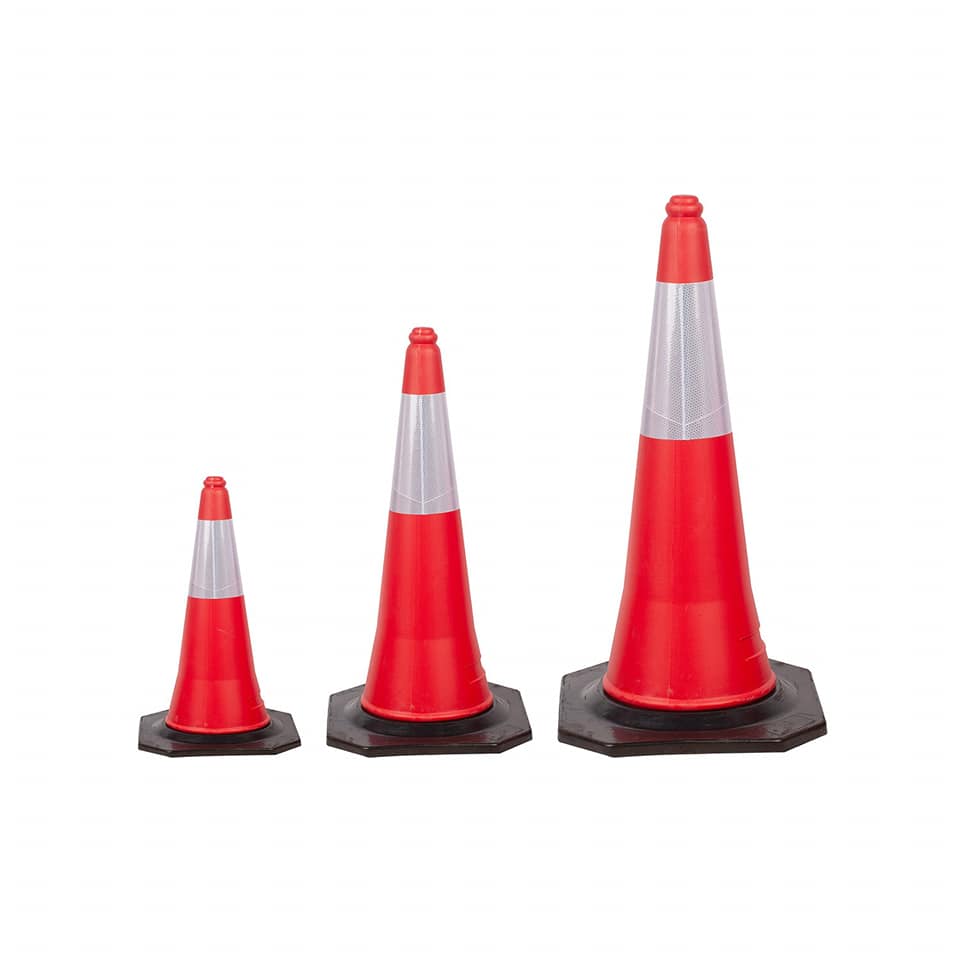
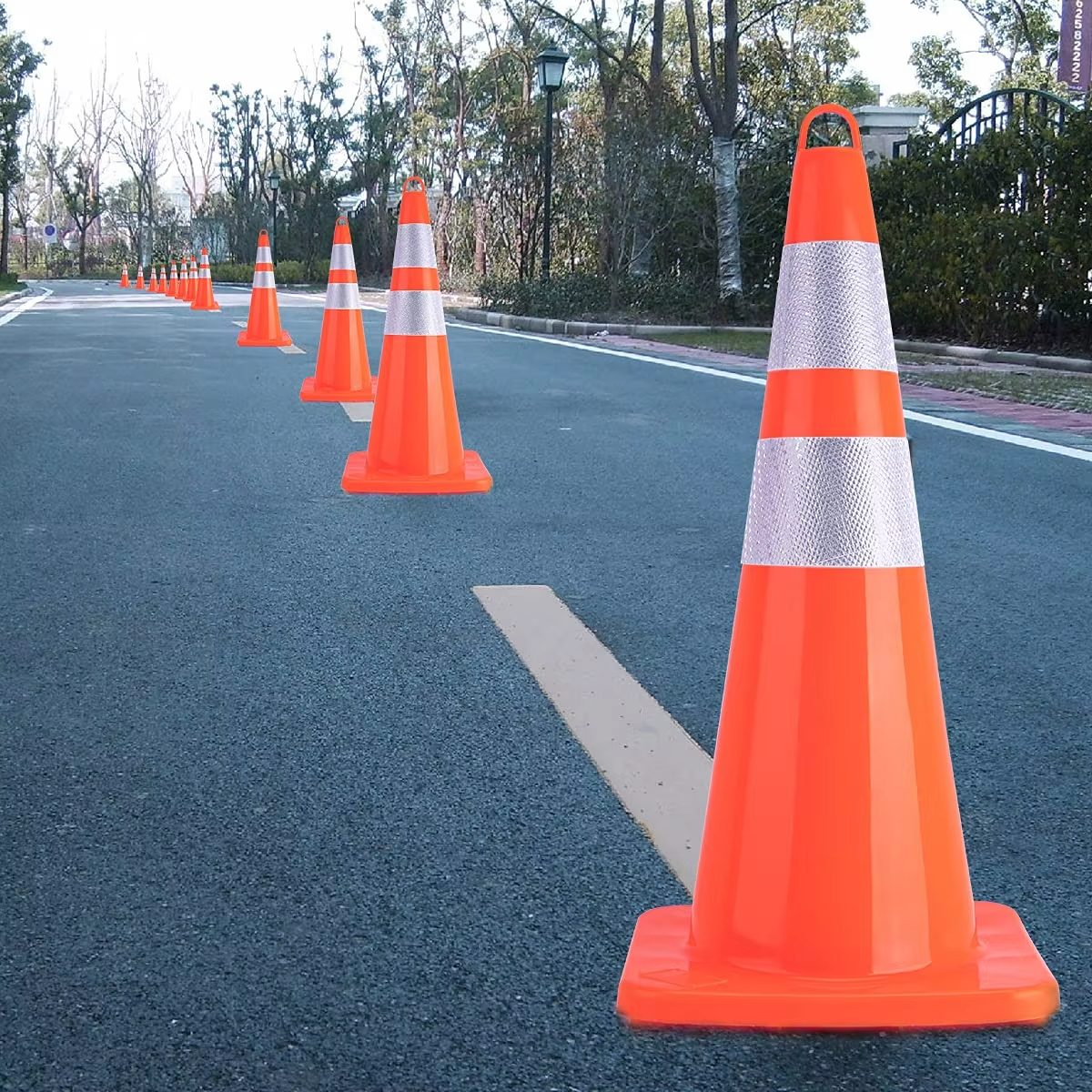
Traffic cones, delineator posts and temporary barriers may use flexible reflective materials designed to withstand bending and repeated handling.
Parking and Commercial Signs
For parking areas, factories and commercial facilities, an economical reflective grade may be sufficient if the application does not require the performance of a high-grade highway product.
7. How to Compare Reflective Sheeting Suppliers in China
Once you have several quotations, don't compare only the price.
Create a simple comparison sheet covering the following:
| Item | Supplier A | Supplier B | Supplier C |
|---|---|---|---|
| Reflective technology | |||
| Reflective grade | |||
| Applicable standard | |||
| Face film material | |||
| Face film thickness | |||
| Adhesive type | |||
| Retroreflective performance | |||
| Outdoor durability | |||
| Roll size | |||
| MOQ | |||
| Price | |||
| Sample available |
This makes it much easier to identify why one supplier is cheaper than another.
A lower quotation may simply mean that the products use a different material, construction or performance level.
8. Questions to Ask Before Ordering
Before placing a bulk order, I recommend asking your supplier these questions:
1. What reflective technology is used?
Glass bead, microprismatic or full cube?
2. What standard does the product meet?
Ask for the exact standard rather than relying only on a grade name.
3. What is the face film material?
PET, PC, PMMA or another material?
4. What is the face film thickness?
Ask for the actual specification.
5. What is the retroreflective performance?
Request technical data or test reports where applicable.
6. What adhesive is used?
Check whether it is suitable for your intended substrate and climate.
7. What is the expected outdoor service life?
Make sure the stated durability matches your application.
8. Can you provide a sample?
A sample allows you to check the product before committing to a large quantity.
9. Can you provide technical documentation?
Ask for a technical data sheet and relevant test information.
10. Will the mass production match the approved sample?
This is particularly important for repeat orders.
9. What About Chinese Reflective Sheeting Compared with International Brands?
Chinese manufacturers have become increasingly competitive in standard and mid-to-high-grade reflective sheeting.
For many applications, buyers can find products with a good balance between performance and cost.
However, it is better to avoid treating a Chinese product as an automatic equivalent of a particular international brand or product series.
For example, a supplier may say that its product is "similar to" a certain well-known series.
That can be useful as a reference, but it does not prove that the two products have identical optical performance, durability or certification.
A better approach is to compare:
Reflective technology
Retroreflective values
Material
Construction
Durability
Applicable standards
Test reports
Actual application requirements
This gives you a more objective comparison.
10. Don't Choose Reflective Sheeting by Price Alone
When sourcing from China, the cheapest quotation can be attractive, especially for large-volume orders.
But a small saving on the purchase price may not be worthwhile if the product has:
Lower optical performance
Poor adhesion
Shorter outdoor life
Inconsistent production
Unclear specifications
No reliable technical documentation
For importers, the better question is not:
"Which supplier has the lowest price?"
It is:
"Which product gives me the right performance for the application at a reasonable total cost?"
That is the comparison that matters.
Need Help Comparing Reflective Sheeting from China?
If you are sourcing reflective sheeting for traffic signs, vehicles or traffic safety products, you can send us your required grade, application, quantity or existing supplier quotation.
We can help you compare the specifications and identify the key differences between products before you place a bulk order.
[Contact SLOAN SAFETY →]
[Explore Our Traffic Safety Products →]
Related Guides
How to Choose the Right Traffic Cone
What Reflective Film Is Used on Traffic Cones?
How to Compare Traffic Safety Product Suppliers in China
How to Buy Traffic Safety Products from China
What Makes a Good Quality Traffic Cone?