Welcome to China Traffic Cone Supplier & Road Safety Products | SLOAN SAFETY
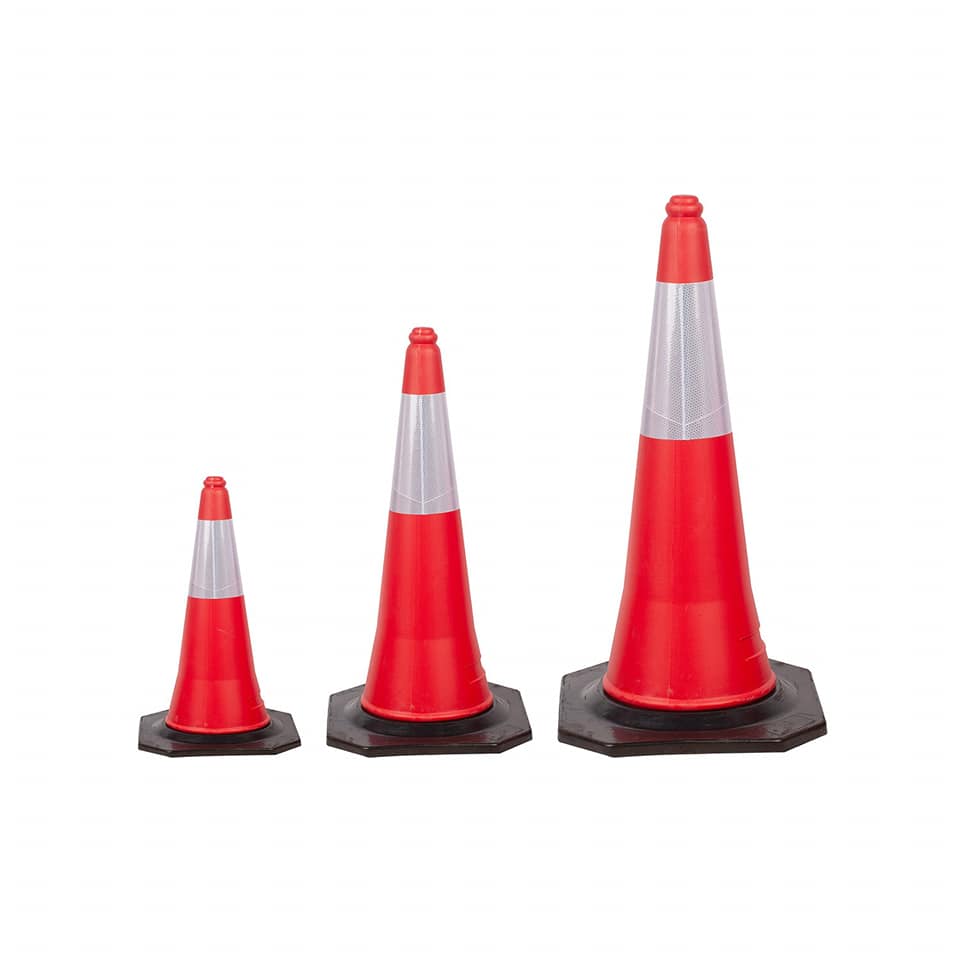
Traffic Cone Size Guide: 30cm, 45cm, 70cm or 90cm?
Choosing a traffic cone size sounds simple until you start comparing different products.
You may see 30cm, 45cm, 70cm and 90cm cones from different suppliers, sometimes with several weight options for the same height. So which one should you actually buy?
The answer depends mainly on where the cones will be used and how visible they need to be.
A small cone can work perfectly well inside a warehouse or parking area. For road construction, the requirements are different. You may need a taller cone, a heavier base and a suitable reflective configuration.
This guide explains the differences between the most common traffic cone sizes and what to consider before placing a bulk order.
| Size | Common Applications | What to Consider |
|---|---|---|
| 30cm | Warehouses, indoor areas, private parking | Compact and easy to carry |
| 45cm | Parking, low-speed areas, temporary warning | Good balance of size and portability |
| 70cm | Road construction, work zones, traffic control | Better visibility for outdoor use |
| 90cm | Large work zones, road construction, higher-speed areas | Greater visibility and stronger visual presence |
These are general applications, not universal rules. The required cone size can be different from one country to another, especially for public roads and government projects.
30cm Traffic Cones
A 30cm traffic cone is mainly about convenience.
It is small, lightweight and easy to move around, which makes it useful for places where vehicles are moving slowly or where the cone does not need to be seen from a long distance.
Typical applications include:
• Warehouses
• Indoor facilities
• Private parking
• Events
• Sports areas
• Low-speed hazard marking
For these applications, carrying a 70cm or 90cm cone around all day would simply be unnecessary.
The downside is visibility. A 30cm cone is much easier to overlook from a distance, particularly outdoors or in busy traffic areas.
Choose 30cm when compact size and easy handling are more important than long-distance visibility.
Explore 30cm Traffic Cones →
45cm Traffic Cones
45cm is a useful middle ground.
The cone is still easy to carry and store, but it has noticeably more presence than a 30cm cone. This is why 45cm cones are often found in parking areas, low-speed traffic areas and general temporary warning applications.
Common uses include:
• Parking lots
• Schools
• Events
• Warehouses
• Private roads
• Low-speed traffic control
If you are looking for a cone that is more visible than a small indoor cone without moving all the way up to a large road-work cone, 45cm can be a practical choice.
For public roads, however, don't choose the height based only on what is commonly sold. Check the requirements for the country and application first.
Explore 45cm Traffic Cones →
70cm Traffic Cones
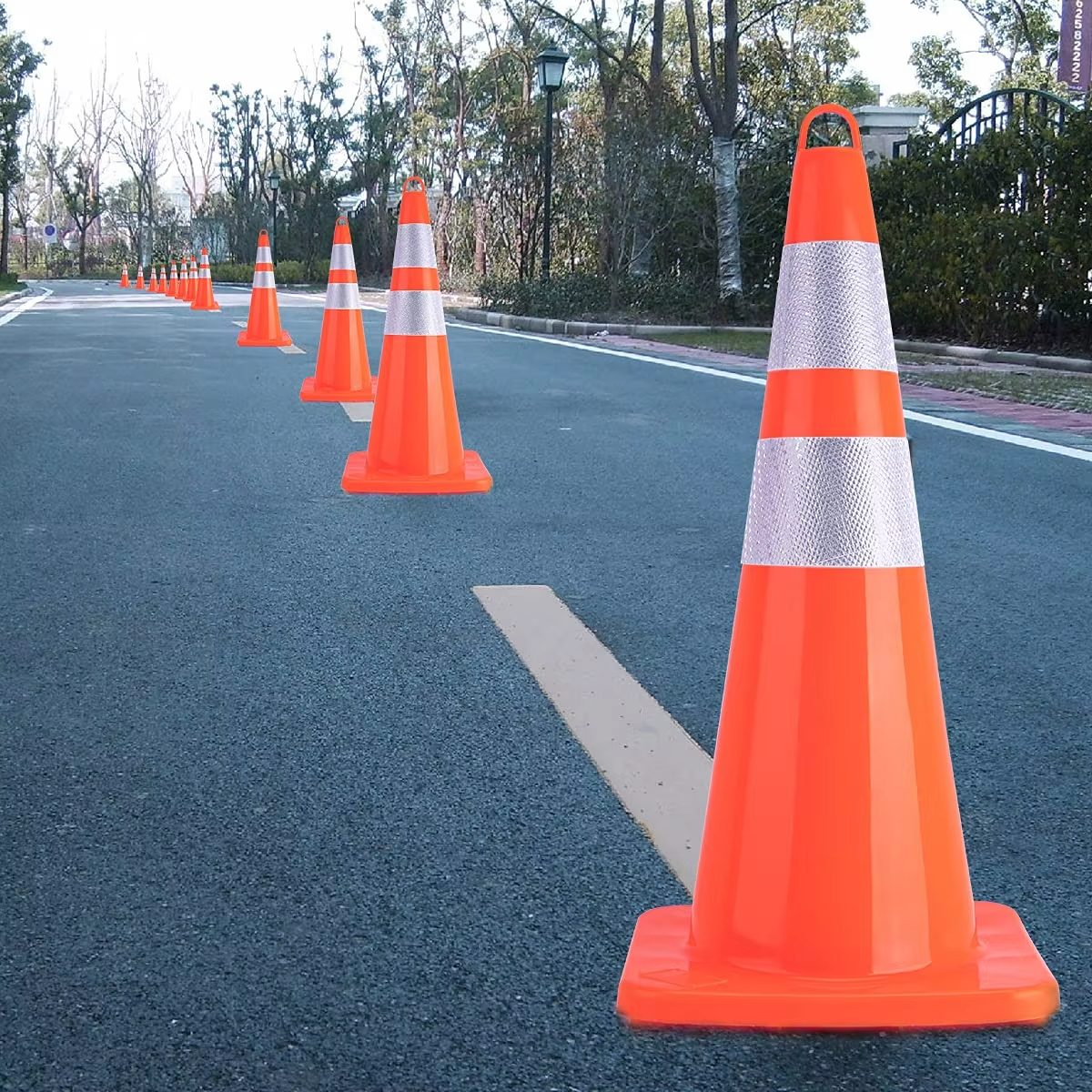
70cm is where traffic cones start to become much more relevant to road work.
This size offers a good combination of visibility, handling and stability, which is why it is commonly used for construction sites, utility work and temporary traffic control.
Typical applications include:
• Road construction
• Utility work
• Municipal maintenance
• Work zones
• Roadside repairs
• Temporary traffic control
One thing worth paying attention to is weight.
A 70cm cone isn't necessarily one standard product. For example, we commonly see different configurations around 1.75kg, 2.25kg and 3.2kg.
The difference is not simply a matter of adding material to make the cone heavier. Base dimensions, wall thickness, material formulation and the construction of the base can all affect the final weight.
So if a customer asks three suppliers for a "70cm traffic cone", they may receive three products that look similar in a photo but perform quite differently.
Explore 70cm Traffic Cones →
90cm Traffic Cones
When visibility becomes more important, 90cm is often the next step.
These cones are commonly considered for larger work zones, road construction and applications where drivers need to identify the traffic-control area from further away.
Typical applications include:
• Large construction sites
• Road work
• Highway-related projects
• Larger work zones
• Higher-speed traffic environments
But there is an important point here:
A 90cm cone is not automatically the correct cone for every highway project.
The required height, weight, base dimensions and reflective bands may be specified by the local road authority or by the project tender.
For example, Chile's current temporary traffic-signage requirements specify different minimum cone heights according to the speed of the work zone. For roads where the maximum speed exceeds 80 km/h, the specified minimum height is 100cm.
This is a good example of why a supplier should not simply recommend a size based on the word "highway".
Explore 90cm Traffic Cones →
Does a Bigger Traffic Cone Always Mean a Better Cone?
Not really.
A bigger cone will generally be easier to see, but that doesn't mean you should always choose the largest size.
Think about the actual application.
A 30cm cone makes sense in a warehouse. A 45cm cone may be convenient for parking. A 70cm cone is often a good fit for road work, while a 90cm cone may make more sense when greater visibility is needed.
There is also a difference between size and stability.
A taller cone is not automatically more stable. The base, total weight and overall construction matter just as much.
This is why we recommend looking at the complete specification rather than choosing a cone simply because it is taller or heavier.
Why Do Traffic Cones of the Same Size Have Different Weights?
This is one of the questions buyers often ask when comparing quotations.
Take a 70cm traffic cone as an example. One supplier might offer a 1.75kg version, another 2.25kg, and another 3.2kg.
All three are 70cm high.
So where does the difference come from?
Several things can affect the weight:
• Base dimensions
• Base thickness
• Wall thickness
• Material formulation
• Mineral fillers
• Overall construction
This is also why a heavier cone does not automatically mean a better-quality cone.
For example, additional mineral filler such as calcium carbonate can increase the weight of a PVC product, but extra weight by itself does not tell you how well the cone will perform after impact.
When comparing suppliers, ask for the complete specification instead of comparing the weight alone.
Read our Traffic Cone Weight Guide →
What About Visibility?
Height is important, but it is only part of the picture.
A traffic cone needs to be visible to drivers, particularly when it is being used outdoors or at night.
The final visibility depends on several factors:
• Cone height
• Orange color
• Reflective sheeting
• Reflective band width
• Number of reflective bands
• Lighting conditions
• Weather
• Road environment
This is why a 90cm cone with poor reflective material is not necessarily a better nighttime warning device than a properly configured 70cm cone.
If your cones will be used at night, specify the reflective material separately when requesting a quotation.
Read our Traffic Cone Reflective Sheeting Guide →
How Does Traffic Speed Affect the Cone Size?
Traffic speed is one of the first things we would look at when choosing a cone for road work.
A cone on a private parking lot does not need to meet the same visibility requirements as one placed beside a high-speed road.
As speed increases, the traffic-control area generally needs to be more visible to approaching drivers. This is one reason taller cones are often used for larger road-work applications.
But there isn't one worldwide rule that says:
"This speed always requires this exact cone height."
Different countries use different traffic-control standards.
Chile is one example. Its temporary traffic-signage requirements set different cone heights according to the maximum speed in the work zone, with a 100cm minimum specified when the maximum speed is above 80 km/h.
So if you are buying cones for a public road project, check the local standard before confirming the size with your supplier.
How Should You Choose Between 30cm, 45cm, 70cm and 90cm?
As a starting point:
30cm
For indoor areas, warehouses, private parking and other low-speed applications where portability is important.
45cm
For parking, temporary warning and other relatively low-speed applications where you want more visibility than a small cone provides.
70cm
For many outdoor applications, including road construction, utility work and temporary traffic control.
90cm
For larger work zones and applications where greater visibility is required, subject to local requirements.
The important thing is not to start with:
"Which is the best size?"
Start with:
"Where will the cone be used?"
That usually makes the answer much clearer.
Don't Specify a Traffic Cone by Height Alone
If you are buying a few cones locally, saying "70cm cone" may be enough.
For a container order, it isn't.
A proper purchase specification should normally include at least:
| Specification | Example |
|---|---|
| Height | 70cm |
| Material | PVC |
| Weight | 2.25kg |
| Base | 350 × 350mm |
| Reflective sheeting | Specified grade |
| Reflective bands | 2 bands |
| Color | Orange |
| Design | Heavy Duty |
| Packaging | Woven bags / pallets |
This becomes particularly important when comparing suppliers from China.
Two suppliers can quote the same "70cm traffic cone" at very different prices because they are not actually offering the same product.
What Size Traffic Cone Should You Use for a Highway?
There isn't a universal answer.
The required size depends on the country, road speed, traffic-control plan and project specification.
In some markets, 70cm cones may be accepted for certain road-work situations. In others, higher-speed roads may require taller cones.
Chile, for example, specifies a minimum height of 100cm when the maximum speed in the work zone exceeds 80 km/h under its temporary traffic-signage requirements.
So if you are purchasing cones for a highway project, don't rely on a supplier's standard "highway cone" specification.
Ask for the applicable standard or tender requirement and make sure the following are confirmed:
• Height
• Weight
• Base dimensions
• Reflective sheeting
• Reflective band configuration
This is much safer than choosing a product based on its name alone.
A Simple Way to Specify Your Traffic Cones
When asking suppliers for quotations, you can provide something as simple as:
70cm PVC traffic cone, 2.25kg, orange, two reflective bands, 350 × 350mm base, packed in woven bags.
This gives the supplier a clear product to quote.
If you don't know the exact specification yet, provide:
• Your application
• Destination country
• Traffic speed
• Required quantity
• Any local standard or tender specification
A good supplier should be able to help you work out the remaining details.
Frequently Asked Questions
What are the most common traffic cone sizes?
30cm, 45cm, 70cm and 90cm are commonly available sizes. Other heights can also be produced for specific markets and applications.
What size traffic cone is best for parking?
45cm is often a practical choice for general parking. For indoor areas or very low-speed applications, 30cm can also be suitable.
What size traffic cone is normally used for road construction?
70cm and 90cm cones are commonly used for road construction and larger work zones, but the required size depends on the local standard.
Are 90cm traffic cones suitable for highways?
They can be, but not necessarily in every country. Highway projects may have specific requirements for height, weight and reflective materials.
Does a heavier traffic cone mean better quality?
No. Weight is only one part of the product. Base design, material, construction and reflective sheeting also affect performance.
Can two traffic cones with the same height have different weights?
Yes. Different base sizes, wall thicknesses, materials and formulations can produce significantly different weights.
Conclusion
There is no single traffic cone size that works everywhere.
For a warehouse, a compact 30cm cone may be all you need. For parking, 45cm can offer a useful balance between size and visibility. For road construction, 70cm is a common choice, while larger work zones may call for 90cm or an even taller cone depending on local requirements.
The best way to choose is to look at the whole application:
Traffic speed → Visibility → Height → Weight → Base → Reflective Sheeting → Local Standard
And if you are buying in bulk, make sure these specifications are confirmed before comparing prices.
A cheaper "70cm traffic cone" is not necessarily cheaper if the weight, base, reflective material or packaging is different.