Welcome to China Traffic Cone Supplier & Road Safety Products | SLOAN SAFETY
Developing a Custom Multi-Function Traffic Baton
Developing a Custom Multi-Function Traffic Baton
A customer recently came to us with a traffic baton that they could not find as a standard product.
They wanted something between a normal traffic baton and a small emergency tool.
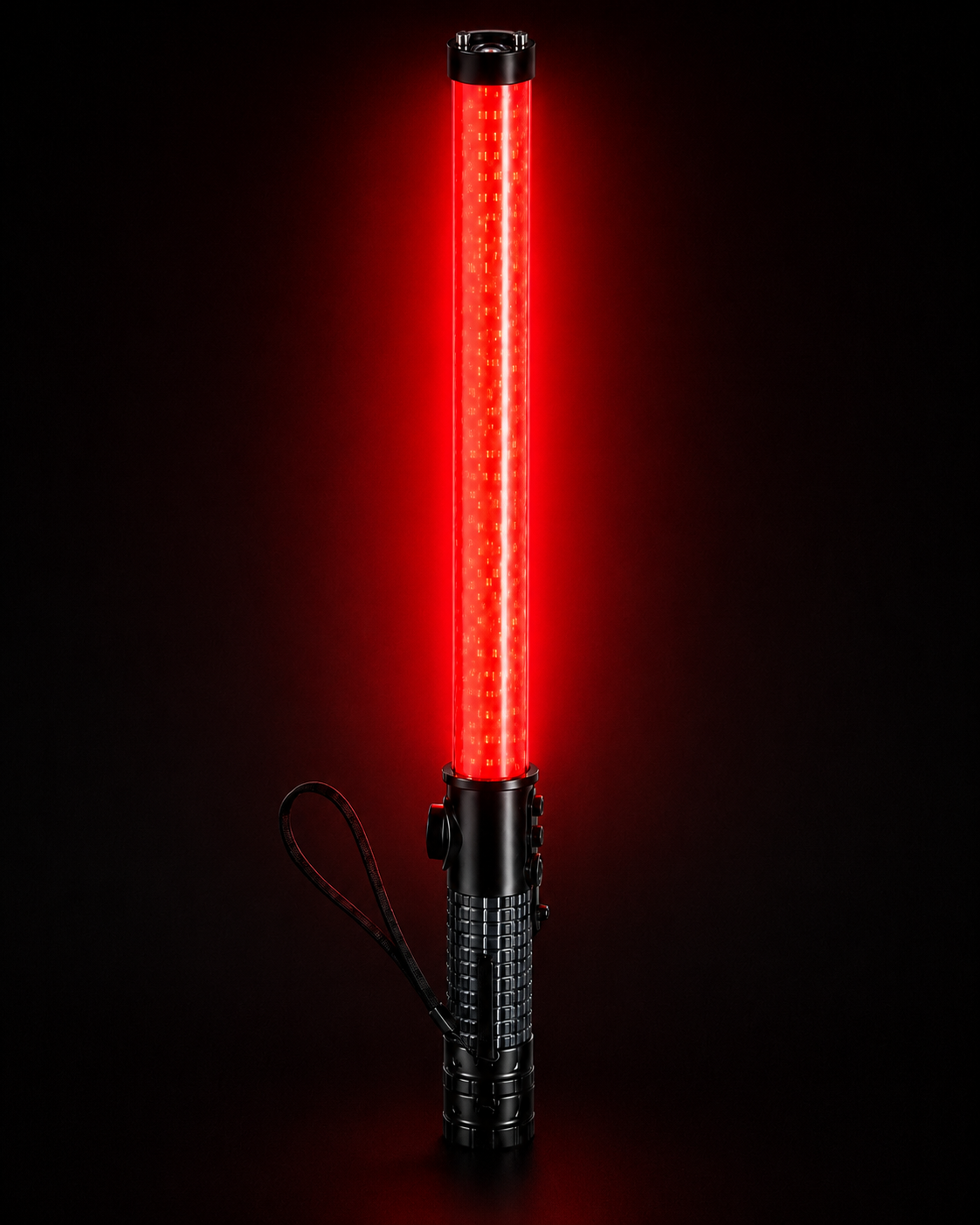
The baton needed to be around 50–55 cm long, rechargeable, and include several functions:
Steady light
Flash / strobe light
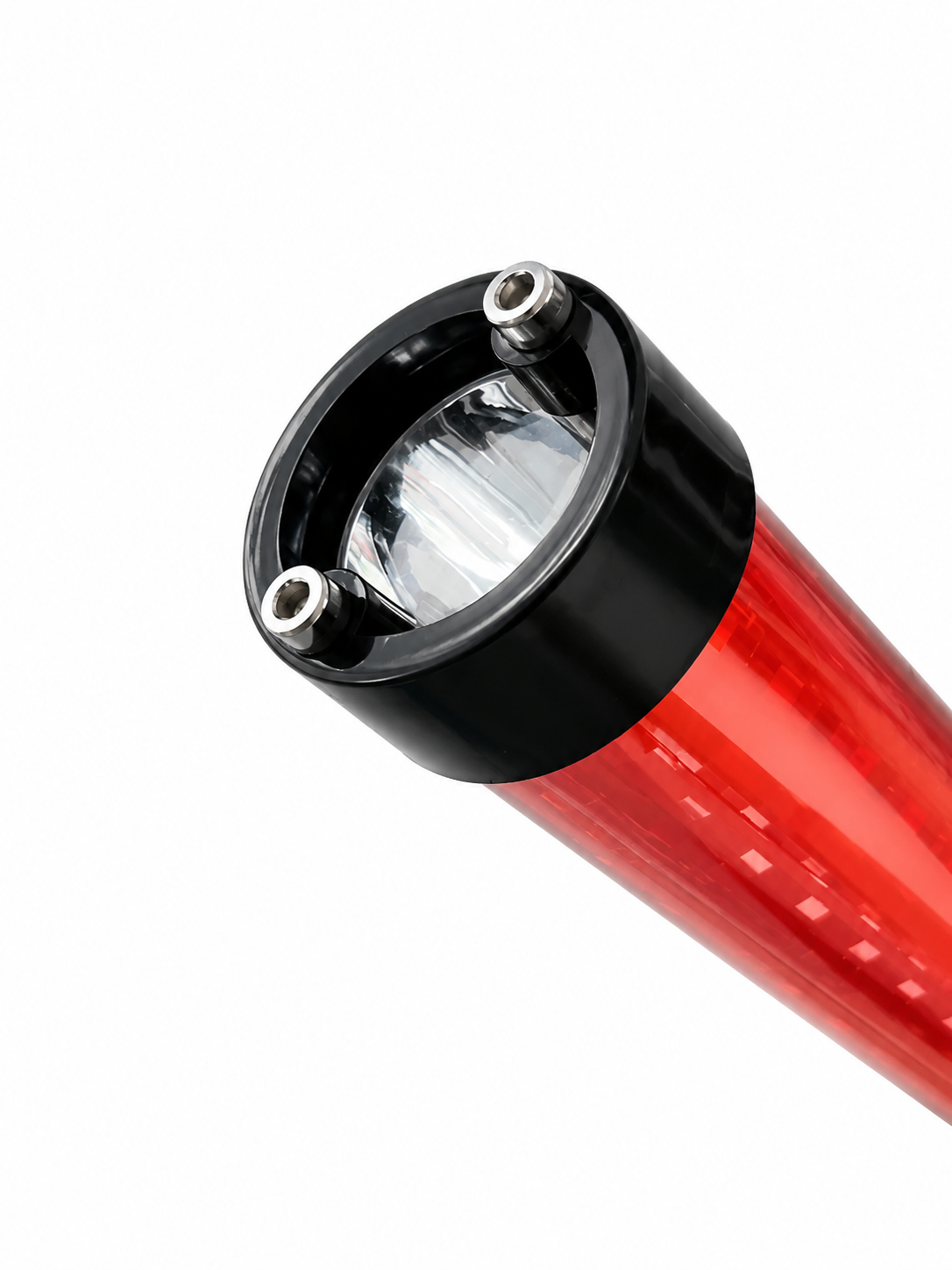
Top spot light
Audible siren
Built-in glass breaker
At first, the list looked manageable.
The difficult part was putting all of these functions into one relatively lightweight baton.
The customer did not want a product that was simply longer and heavier because more components had been added. They wanted something that could still be handled comfortably.
So we discussed the requirements with the factory and started looking at the internal structure.
The Glass Breaker Was the First Problem
The glass breaker created the biggest structural concern.
A normal traffic baton mainly needs to support the battery, circuit board and LEDs. A glass breaker is different because it needs to withstand impact.
We couldn't simply attach the breaker to the end of the existing baton.
The internal structure around it needed to be stronger, but adding too much material would increase the weight and change the balance of the baton.
So the factory adjusted the internal support structure and tested different component arrangements.
The idea was not to make the whole baton heavier.
We wanted to reinforce the part that actually needed reinforcement.
Then We Had to Deal With the Weight
Once the battery, siren and other electronic components were added, we started paying more attention to where everything was placed.
With a 50–55 cm baton, even a relatively small change in component position can make it feel quite different in the hand.
We tested different positions for the battery and electronic components and looked at the overall balance.
This was one of those details that is difficult to judge from a drawing alone.
The sample needs to be physically assembled and handled.
Getting the Electronics to Work Together
The lighting system and siren also shared the same rechargeable power system.
The customer wanted three lighting functions:
Steady → Flash/Strobe → Top Spot Light
They also wanted the siren to work reliably without affecting the lighting functions.
The factory therefore had to adjust the circuit and component layout rather than simply adding another switch to the existing design.
After several discussions with the factory, we were able to integrate the different functions into the same housing.
From the First Idea to the Finished Sample
Once the main structure was worked out, we moved on to the sample.
We checked the things that mattered most to the customer:
Overall length
Weight and balance
Light modes
Top spot light
Siren
Rechargeable function
Glass breaker
Internal component arrangement
General appearance
The finished sample was much closer to what the customer had originally described.
It was still a traffic baton, but it was no longer a standard traffic baton.
It had become a multi-function safety tool designed around a specific application.
Why This Wasn't a Simple Product Modification
One thing we learned from this project is that adding functions to an existing product is rarely as simple as it sounds.
For example:
Adding the glass breaker meant looking at the structure.
Adding the battery affected the available space.
Adding the siren affected the electronics.
Changing the length affected the balance.
Putting everything together affected the overall design.
Each change had an impact somewhere else.
That's why we prefer to discuss the complete product requirement with the factory before deciding how to modify a standard model.
The Final Configuration
The customized traffic baton included:
50–55 cm length
Rechargeable battery
Steady light
Flash / strobe light
Top spot light
Integrated siren
Reinforced glass breaker
The exact configuration was developed around the customer's requirements rather than taken directly from an existing catalog model.
What We Can Do With Similar OEM Projects
Not every customized product needs to start from zero.
In many cases, it is more practical to start with an existing product and modify the parts that matter.
Depending on the project, we can work with the factory on:
Product dimensions
Internal structure
Materials
Components
Lighting functions
Battery configuration
Circuit design
Product appearance
Packaging
Logo and labeling
Sometimes the customer already has a drawing.
Sometimes they have a sample from another supplier.
And sometimes they only have a photo and a list of functions.
We can start from any of these and discuss with the factory what is actually possible.
Have a Traffic Safety Product That Needs to Be Customized?
If you have a product idea that you cannot find in a standard catalog, send us the specifications, drawing, sample or even just a product photo.
We'll first look at what can be done with an existing product before deciding whether a completely new design is necessary.
[Send Your OEM/ODM Requirements]
[Explore Traffic Safety Products]